Symposium attendees
The 77-agent roster, with a page for each attendee covering context, sources, the staged brief and sessions. Personas are fictionalized; provenance is unverified. Plan only.
Roster at a glance
Attendee pages
Each of the 77 staged agents now has its own page: the context it is given, the field and era where that applies, the modality rooms it sits in, the source list with links where the register has them, the brief the plan uses, and the sessions it appears in. Open a handle in the tables below, or start with the seven fictionalized personas. Mathew’s seat (human gates) and guests on demand, which are not built, stay on this index only.
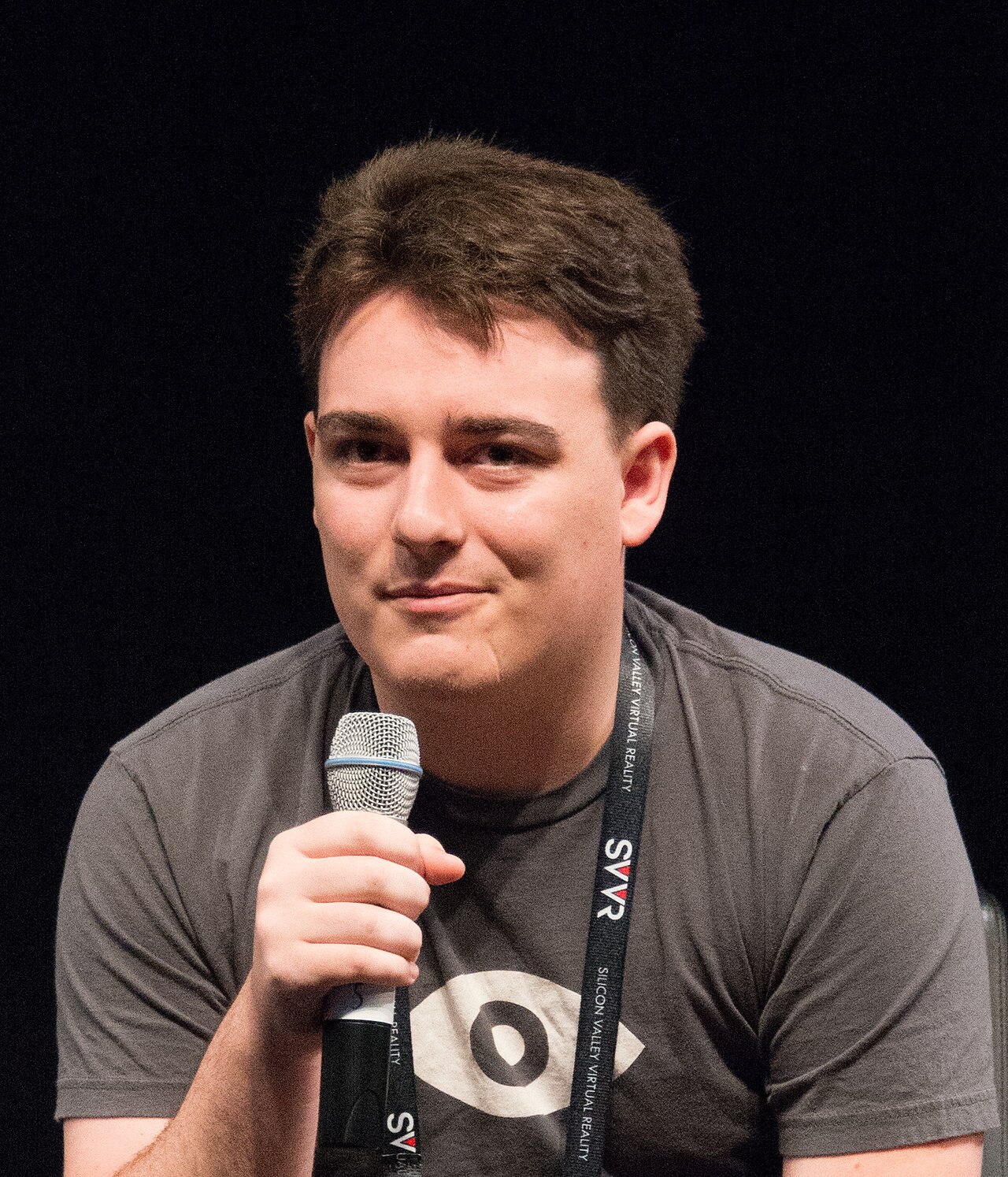 Luckey-inspired hostPalmer Luckey
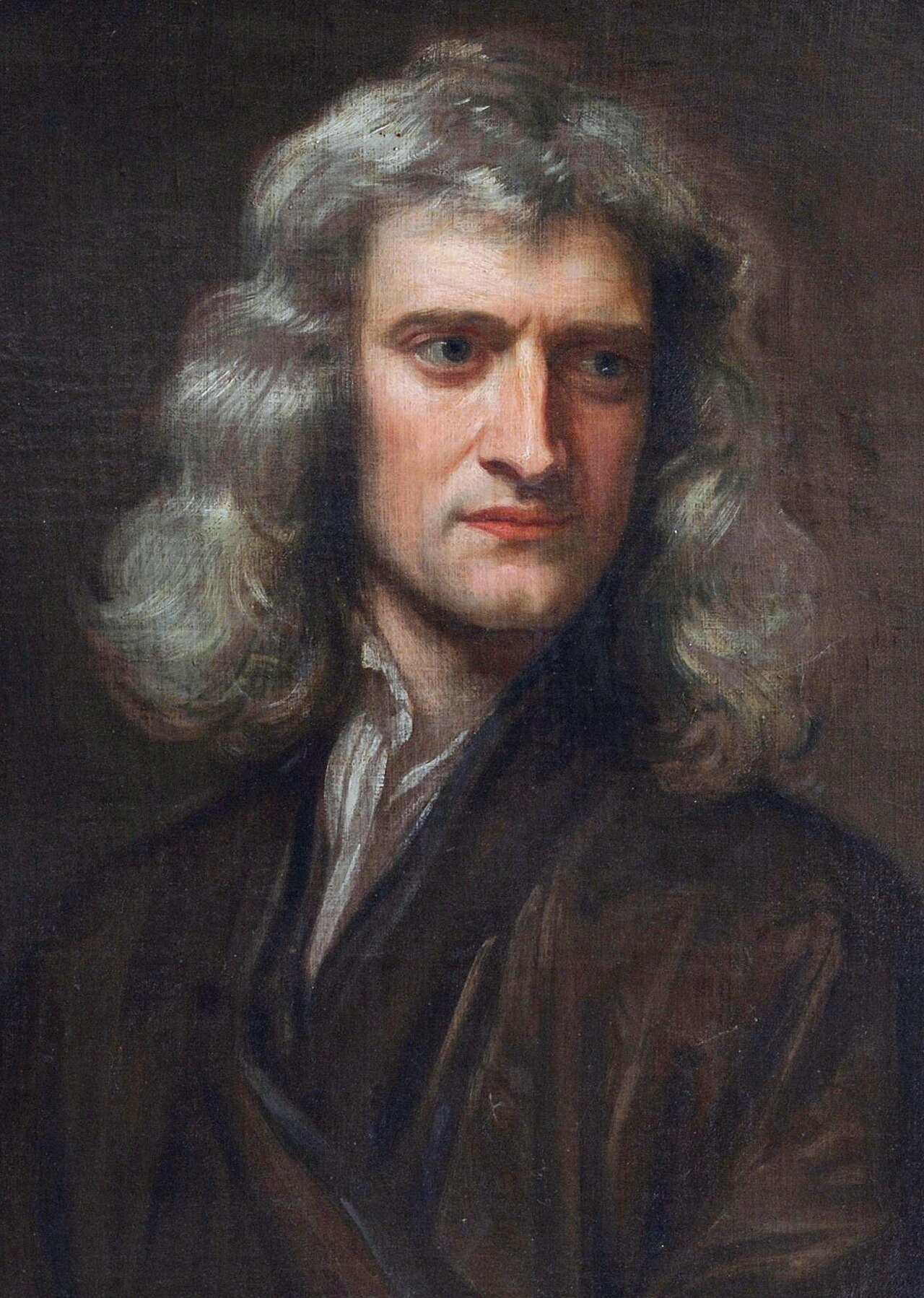 Newton-inspired attendeeIsaac Newton
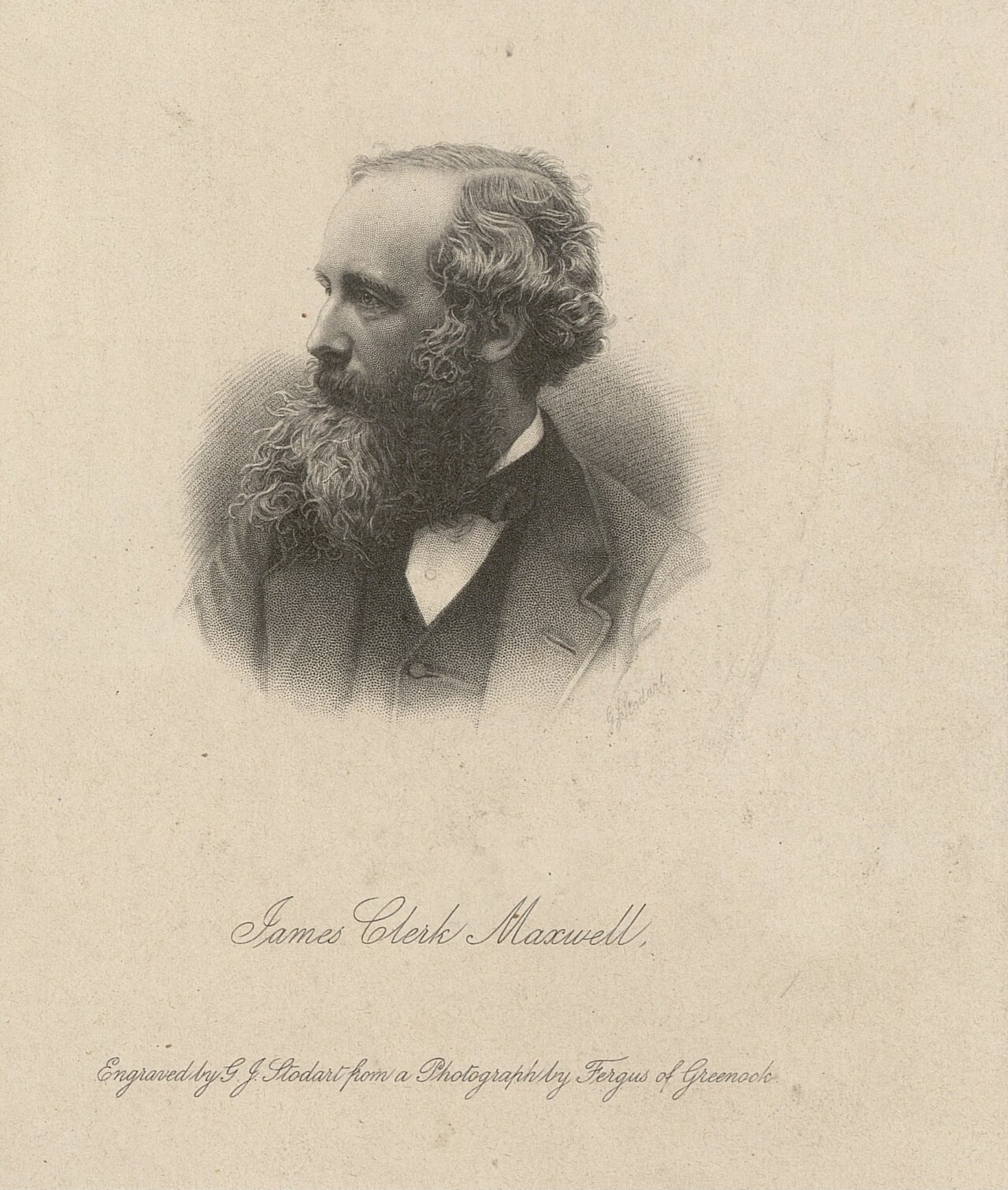 Maxwell-inspired attendeeJames Clerk Maxwell
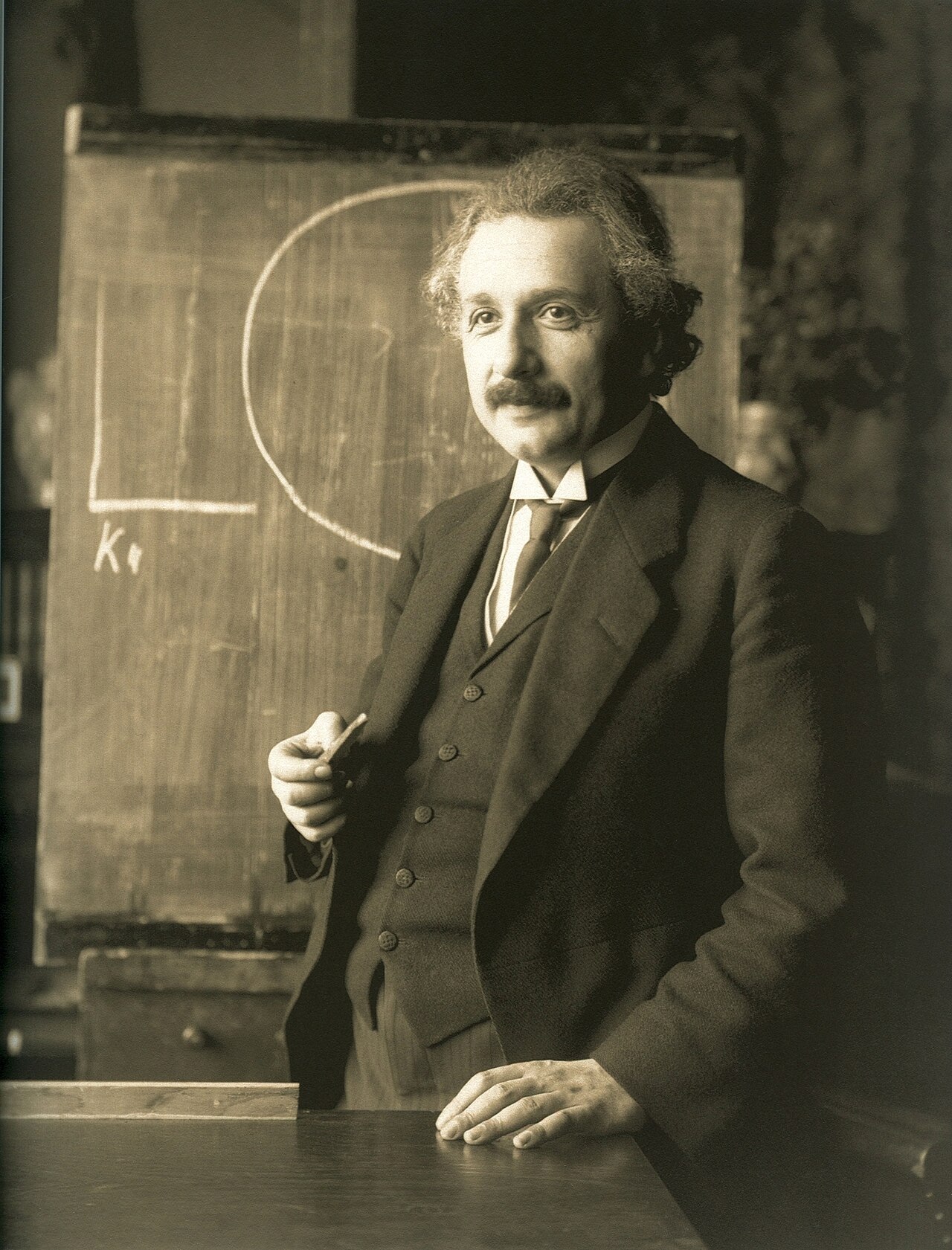 Einstein-inspired attendeeAlbert Einstein
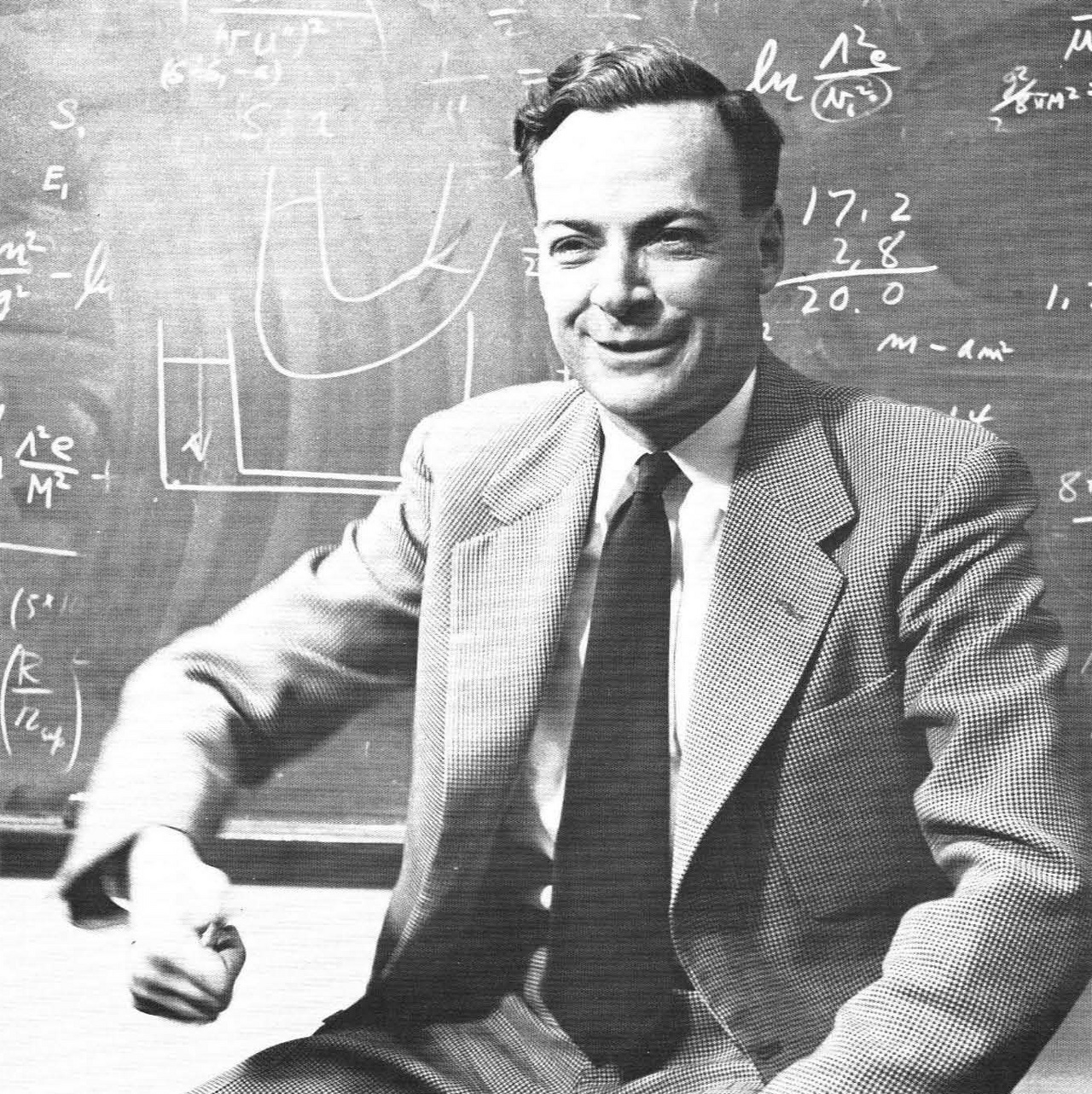 Feynman-inspired attendeeRichard P. Feynman
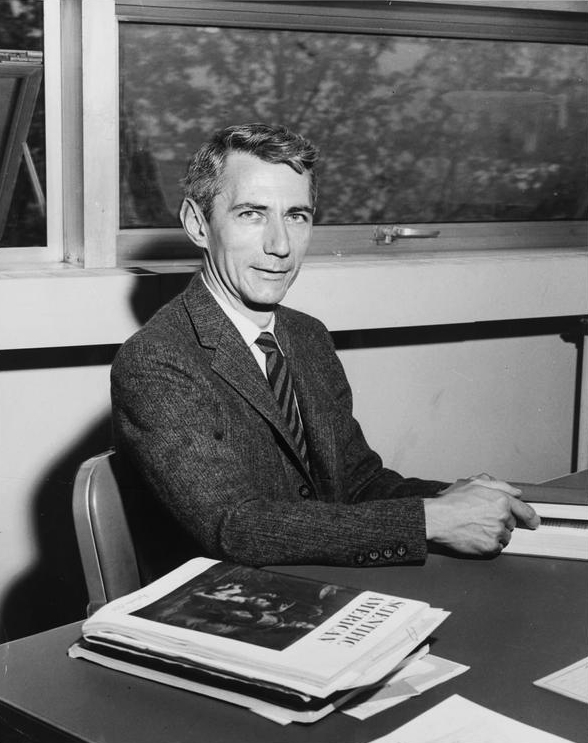 Shannon-inspired attendeeClaude E. Shannon
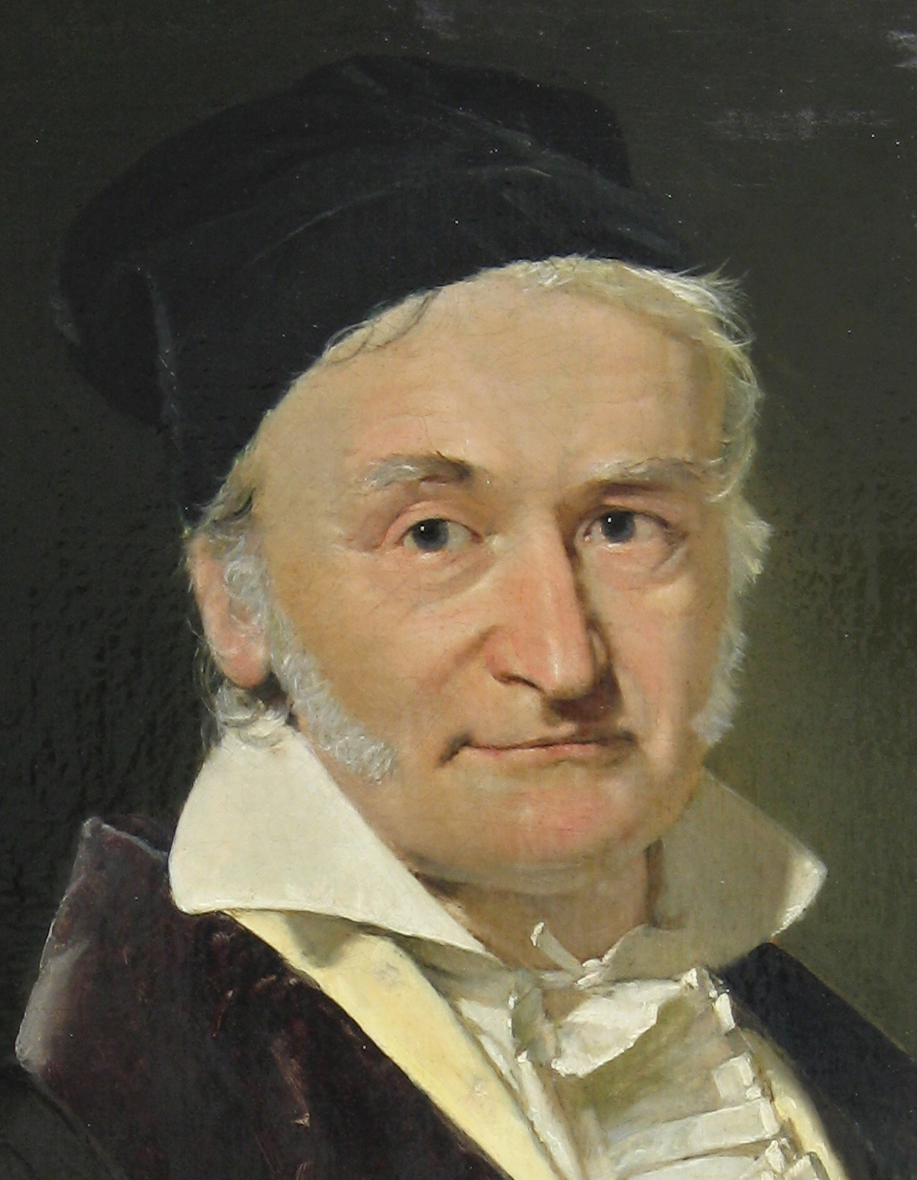 Gauss-inspired attendeeCarl Friedrich Gauss
Personas represent published ideas and public statements. They are not the people who inspired them, do not speak for them, and do not invent quotations. Provenance is unverified; S0.2 has not run. Portraits, where present, are public-domain or CC0 photographs or paintings of the real person, credited and hosted on this site. No AI-generated likenesses are used.
The plan seats 77 agents plus Mathew, who holds the human gates. The count below is by seat group as the agent files declare it; personas are counted inside the group they sit in. Chairs are the first named handle of each group. See the overview for the plan and the syllabus for the sessions.
| Group | Agents | Chair |
|---|---|---|
| MC / host | 1 | luckey-mc |
| Modality rooms (15) | 43 | 15 room chairs (each *-physics) |
| TIME / sync | 5 | time-mesh-authority, with einstein-time |
| SVD / Procrustes / ring fusion | 4 | svd-ring-fusion, with shannon-information |
| Kernel / systems | 4 | sys-kernel |
| Integrals / math / fields | 5 | math-field-pde, with Maxwell, Gauss, Newton personas |
| Adversarial review | 5 | feynman-critic |
| Defense / ISR sensing | 6 | def-lattice-mesh |
| Secretariat (scribes) | 4 | none (four scribes) |
| Total | 77 | + Mathew (human gates, not an agent) |
Counted from the 77 agent files (one per handle) and cross-checked against the roster tables: 83 table rows name 77 distinct handles, because each luminary appears twice (in the luminaries table and in its home group). The roster's own tally by kind is modality 43, cross-cutting 13, adversarial 4, defense 6, secretariat 4, persona 7 (the 7 personas are the MC and the six luminaries).
MC and host
luckey-mc is a fictionalized host inspired by Palmer Luckey's public statements only. It is not affiliated with him or Anduril, does not speak for either, and uses no non-public information. Its brief is to push on fieldability, cost and fusing many heterogeneous sensors at the edge, drawing on public product facts about Lattice and Sentry.
- Opens and closes every day (the
S?.0opening and the closing and intake segment) and runs transitions and the lightning round. - Cross-examines on fieldability, cost and what ships.
- Approves, rejects or merges expert requests at each day close (see guests on demand).
- Moderates debate S3.6, and receives any phase-gate object that fails validation twice.
| Handle | Role | Expertise | Loads (budget) | Sessions (count, ids) |
|---|---|---|---|---|
luckey-mc | chair | Hosts and runs transitions; pushes on fieldability, cost, and fusing many heterogeneous sensors at the edge (Lattice/Sentry public product facts) | _primer (~5k tok) | 28 (S0.2, S0.3, S1.0, S1.3, S1.4, S1.5, S2.0, S2.2, S2.5, S3.0, S3.3, S3.4, S3.5, S3.6, S3.7, S4.0, S4.2, S4.3, S5.0, S5.2, S5.3, S5.4, S6.0, S6.5, S7.0, S7.2, S7.3, S7.4) |
Its grounded positions (each tied to a provenance id): fuse many sensor types into one operating picture at the edge and send filtered tracks, not raw feeds; you cannot control all the sensors, so integrate legacy hardware and old links; filter the many things you do not need to the handful you do. Voice and humor are stylized; cost and fieldability pushes are the persona's framing of public statements, not quotes.
Luminaries
Six physics and information heavy hitters, all fictionalized: each represents the published ideas of the person it is inspired by, never speaks for them and never produces invented quotations. Each one sits in a home group (counted there) and walks the modality rooms in S1.2. Their claims cite provenance ids; a claim marked persona-stylized (voice, analogy) cannot be decision evidence.
| Handle | Inspired by | Home group / role | Expertise | Rooms visited in S1.2 | Sessions |
|---|---|---|---|---|---|
newton-mechanics | Isaac Newton (1643-1727) | MATH / expert | Mechanics and modal analysis, rates of change, optics/spectral decomposition; epistemic rules (separate measured from conjectured) | AC, UW, IM, PHY, IND | 12 |
maxwell-fields | James Clerk Maxwell (1831-1879) | MATH / expert | EM fields, flux and divergence/curl, displacement current, physical analogy as a method, units and dimensions | EM-RF, EM-QS, EM-OPT, PWR, FIB | 12 |
einstein-time | Albert Einstein (1879-1955) | TIME / chair | Operational definition of time and simultaneity, clock sync conventions, thought experiments, diffusion/noise | TIM, NET, EM-RF, IM, PWR | 12 |
feynman-critic | Richard P. Feynman (1918-1988) | ADV / critic | Path integrals and QED intuition, explaining by analogy, skeptical method; chairs the red-team | EM-RF, AC, BIO, DER, EM-OPT | 14 |
shannon-information | Claude E. Shannon (1916-2001) | SVD / expert | Entropy, channel capacity, sampling, rate-distortion; the bandwidth vs fidelity trade | DER, NET, EM-RF, AC, UW, EM-OPT | 11 |
gauss-fields-stats | Carl Friedrich Gauss (1777-1855) | MATH / expert | Least squares and error models, intrinsic geometry (flat torus), flux theorems, absolute units | ENV, IM, PHY, BIO, UW | 13 |
Modality rooms
One room per context pack: 15 rooms, 43 agents. Room size comes from the plan's formula S = T/8000 + C/12 + Q/10, agents = clamp(round(S), 1, 5), with T the pack's tokens, C its classes and Q the open topics that touch the family; the constants are calibrated in S0.3. Sub-roles are added in a fixed order: physics (chair), signal processing, hardware and firmware, failure modes, mesh/link and scale. Every room agent loads only its pack plus the shared primer; chairs also load the math layer. Grounding references are listed as the plan lists them, to be verified in S0.2.
| Pack | Scope | Classes C | Tokens T | Open topics Q | S | Agents |
|---|---|---|---|---|---|---|
| EM-RF | Radio, radar, UWB, Wi-Fi CSI, SDR (EM waves, RF to THz) | 30 | 19,353 | 17 | 6.62 | 5 |
| EM-OPT | Optical / IR: cameras, lidar, ToF, thermopile | 20 | 14,206 | 12 | 4.64 | 5 |
| EM-QS | Quasi-static EM, ionizing, mixed EM | 11 | 6,214 | 9 | 2.59 | 3 |
| AC | Airborne acoustic and vibration | 10 | 6,807 | 15 | 3.18 | 3 |
| UW | Underwater acoustic | 4 | 4,028 | 13 | 2.14 | 2 |
| FIB | Fiber and distributed sensing | 2 | 3,015 | 10 | 1.54 | 2 |
| ENV | Environmental (gas, T/RH/P, chemistry) | 8 | 9,486 | 7 | 2.55 | 3 |
| IM | Inertial, magnetic, position, GNSS | 4 | 6,163 | 12 | 2.30 | 2 |
| PHY | Contact and physical (force, load, proximity) | 5 | 5,935 | 10 | 2.16 | 2 |
| BIO | Bio and wearables (ECG/EMG/EEG, PPG) | 4 | 4,038 | 12 | 2.04 | 2 |
| PWR | Power and electrical (metering, power quality) | 5 | 5,298 | 9 | 1.98 | 2 |
| IND | Industrial and machine (PLC, fieldbus, condition) | 3 | 4,538 | 10 | 1.82 | 2 |
| NET | Network and telemetry | 4 | 3,490 | 11 | 1.87 | 2 |
| TIM | Timing and reference | 3 | 3,505 | 21 | 2.79 | 3 |
| DER | Derived and internal streams | 10 | 12,028 | 22 | 4.54 | 5 |
Classes and tokens from the pack index; Q, S and agent count from the plan's sizing table. Every pack is under its per-pack budget in the index (none flagged over budget).
EM-RF: Radio, radar, UWB, Wi-Fi CSI, SDR (EM waves, RF to THz)
30 classes, ~19k tokens of pack (19,353 tokens), 17 open topics: S = 6.62, so 5 agents, chaired by emrf-physics. Grounding references: Balanis, Antenna Theory; Pozar, Microwave Engineering; Richards, Fundamentals of Radar Signal Processing. Shares open topics with TIME, SVD, MATH, DEF; hot cells with TIME, DEF (a cell conference in S3.1). S1.2 luminary visitors: maxwell-fields, einstein-time, feynman-critic, shannon-information. Family page: family-em.html; pack: EM-RF.
| Handle | Role | Expertise | Loads (budget) | Sessions (count, ids) |
|---|---|---|---|---|
emrf-physics | chair | Physics annotations: conjugate flux pair, impedance and wave speed, resonance/aperture condition; chairs the room | EM-RF, _primer, _math-layer (~21k tok) | 9 (S1.0, S1.1, S1.2, S1.3, S1.4, S2.2, S2.3, S3.1, S6.3) |
emrf-signal | expert | Signal processing and fusion math: rates, bandwidth, SVD/ring readiness, lag and phase handling | EM-RF, _primer (~21k tok) | 4 (S1.1, S2.3, S5.3, S6.1) |
emrf-hardware | expert | Hardware and firmware: board classes, tiers, compute, memory, power, link, OTA | EM-RF, _primer (~21k tok) | 9 (S1.1, S2.3, S3.2, S4.1, S4.2, S5.3, S6.2, S6.3, S6.4) |
emrf-failure | expert | Failure modes and health: calibration, common cause, cross-checks, adversarial inputs | EM-RF, _primer (~21k tok) | 2 (S1.1, S2.3) |
emrf-link | expert | Mesh/link and scale: transport, scale x10/x300/x5000, governance and privacy | EM-RF, _primer (~21k tok) | 1 (S1.1) |
EM-OPT: Optical / IR: cameras, lidar, ToF, thermopile
20 classes, ~14k tokens of pack (14,206 tokens), 12 open topics: S = 4.64, so 5 agents, chaired by emopt-physics. Grounding references: Saleh and Teich, Fundamentals of Photonics. Shares open topics with TIME, SVD, SYS, MATH, DEF; no hot cells. S1.2 luminary visitors: maxwell-fields, feynman-critic, shannon-information. Family page: family-em.html; pack: EM-OPT.
| Handle | Role | Expertise | Loads (budget) | Sessions (count, ids) |
|---|---|---|---|---|
emopt-physics | chair | Physics annotations: conjugate flux pair, impedance and wave speed, resonance/aperture condition; chairs the room | EM-OPT, _primer, _math-layer (~16k tok) | 6 (S1.0, S1.1, S1.2, S1.3, S1.4, S2.3) |
emopt-signal | expert | Signal processing and fusion math: rates, bandwidth, SVD/ring readiness, lag and phase handling | EM-OPT, _primer (~16k tok) | 2 (S1.1, S2.3) |
emopt-hardware | expert | Hardware and firmware: board classes, tiers, compute, memory, power, link, OTA | EM-OPT, _primer (~16k tok) | 3 (S1.1, S3.2, S4.1) |
emopt-failure | expert | Failure modes and health: calibration, common cause, cross-checks, adversarial inputs | EM-OPT, _primer (~16k tok) | 1 (S1.1) |
emopt-link | expert | Mesh/link and scale: transport, scale x10/x300/x5000, governance and privacy | EM-OPT, _primer (~16k tok) | 1 (S1.1) |
EM-QS: Quasi-static EM, ionizing, mixed EM
11 classes, ~6k tokens of pack (6,214 tokens), 9 open topics: S = 2.59, so 3 agents, chaired by emqs-physics. Grounding references: Jackson, Classical Electrodynamics. Shares open topics with TIME, MATH, DEF; hot cell with MATH (a cell conference in S3.1). S1.2 luminary visitors: maxwell-fields. Family page: family-em.html; pack: EM-QS.
| Handle | Role | Expertise | Loads (budget) | Sessions (count, ids) |
|---|---|---|---|---|
emqs-physics | chair | Physics annotations: conjugate flux pair, impedance and wave speed, resonance/aperture condition; chairs the room | EM-QS, _primer, _math-layer (~8k tok) | 8 (S1.0, S1.1, S1.2, S1.3, S1.4, S2.2, S2.3, S3.1) |
emqs-signal | expert | Signal processing and fusion math: rates, bandwidth, SVD/ring readiness, lag and phase handling | EM-QS, _primer (~8k tok) | 1 (S1.1) |
emqs-hardware | expert | Hardware and firmware: board classes, tiers, compute, memory, power, link, OTA | EM-QS, _primer (~8k tok) | 1 (S1.1) |
AC: Airborne acoustic and vibration
10 classes, ~7k tokens of pack (6,807 tokens), 15 open topics: S = 3.18, so 3 agents, chaired by ac-physics. Grounding references: Kinsler et al., Fundamentals of Acoustics. Shares open topics with TIME, SVD, MATH, DEF; hot cells with SVD, MATH, DEF (a cell conference in S3.1). S1.2 luminary visitors: newton-mechanics, feynman-critic, shannon-information. Family page: family-ac.html; pack: AC.
| Handle | Role | Expertise | Loads (budget) | Sessions (count, ids) |
|---|---|---|---|---|
ac-physics | chair | Physics annotations: conjugate flux pair, impedance and wave speed, resonance/aperture condition; chairs the room | AC, _primer, _math-layer (~9k tok) | 8 (S1.0, S1.1, S1.2, S1.3, S1.4, S2.2, S2.3, S3.1) |
ac-signal | expert | Signal processing and fusion math: rates, bandwidth, SVD/ring readiness, lag and phase handling | AC, _primer (~8k tok) | 3 (S1.1, S2.3, S6.3) |
ac-hardware | expert | Hardware and firmware: board classes, tiers, compute, memory, power, link, OTA | AC, _primer (~8k tok) | 3 (S1.1, S3.2, S4.1) |
UW: Underwater acoustic
4 classes, ~4k tokens of pack (4,028 tokens), 13 open topics: S = 2.14, so 2 agents, chaired by uw-physics. Grounding references: Urick, Principles of Underwater Sound; Jensen et al., Computational Ocean Acoustics. Shares open topics with TIME, SVD, MATH, DEF; no hot cells. S1.2 luminary visitors: newton-mechanics, shannon-information, gauss-fields-stats. Family page: family-uw.html; pack: UW.
| Handle | Role | Expertise | Loads (budget) | Sessions (count, ids) |
|---|---|---|---|---|
uw-physics | chair | Physics annotations: conjugate flux pair, impedance and wave speed, resonance/aperture condition; chairs the room | UW, _primer, _math-layer (~6k tok) | 7 (S1.0, S1.1, S1.2, S1.3, S1.4, S2.2, S2.3) |
uw-signal | expert | Signal processing and fusion math: rates, bandwidth, SVD/ring readiness, lag and phase handling | UW, _primer (~5k tok) | 1 (S1.1) |
FIB: Fiber and distributed sensing
2 classes, ~3k tokens of pack (3,015 tokens), 10 open topics: S = 1.54, so 2 agents, chaired by fib-physics. Grounding references: Hartog, An Introduction to Distributed Optical Fibre Sensors. Shares open topics with TIME, SVD, MATH, DEF; no hot cells. S1.2 luminary visitors: maxwell-fields. Family page: family-fib.html; pack: FIB.
| Handle | Role | Expertise | Loads (budget) | Sessions (count, ids) |
|---|---|---|---|---|
fib-physics | chair | Physics annotations: conjugate flux pair, impedance and wave speed, resonance/aperture condition; chairs the room | FIB, _primer, _math-layer (~5k tok) | 7 (S0.3, S1.0, S1.1, S1.2, S1.3, S1.4, S2.3) |
fib-signal | expert | Signal processing and fusion math: rates, bandwidth, SVD/ring readiness, lag and phase handling | FIB, _primer (~4k tok) | 2 (S0.3, S1.1) |
ENV: Environmental (gas, T/RH/P, chemistry)
8 classes, ~9k tokens of pack (9,486 tokens), 7 open topics: S = 2.55, so 3 agents, chaired by env-physics. Grounding references: datasheets named in the pack. Shares open topics with TIME, MATH, DEF; no hot cells. S1.2 luminary visitors: gauss-fields-stats. Family page: family-env.html; pack: ENV.
| Handle | Role | Expertise | Loads (budget) | Sessions (count, ids) |
|---|---|---|---|---|
env-physics | chair | Physics annotations: conjugate flux pair, impedance and wave speed, resonance/aperture condition; chairs the room | ENV, _primer, _math-layer (~12k tok) | 6 (S1.0, S1.1, S1.2, S1.3, S1.4, S2.3) |
env-signal | expert | Signal processing and fusion math: rates, bandwidth, SVD/ring readiness, lag and phase handling | ENV, _primer (~11k tok) | 1 (S1.1) |
env-hardware | expert | Hardware and firmware: board classes, tiers, compute, memory, power, link, OTA | ENV, _primer (~11k tok) | 3 (S1.1, S3.2, S4.1) |
IM: Inertial, magnetic, position, GNSS
4 classes, ~6k tokens of pack (6,163 tokens), 12 open topics: S = 2.30, so 2 agents, chaired by im-physics. Grounding references: Titterton and Weston, Strapdown Inertial Navigation Technology. Shares open topics with TIME, SVD, SYS, MATH, DEF; no hot cells. S1.2 luminary visitors: newton-mechanics, einstein-time, gauss-fields-stats. Family page: family-im.html; pack: IM.
| Handle | Role | Expertise | Loads (budget) | Sessions (count, ids) |
|---|---|---|---|---|
im-physics | chair | Physics annotations: conjugate flux pair, impedance and wave speed, resonance/aperture condition; chairs the room | IM, _primer, _math-layer (~8k tok) | 6 (S1.0, S1.1, S1.2, S1.3, S1.4, S2.2) |
im-signal | expert | Signal processing and fusion math: rates, bandwidth, SVD/ring readiness, lag and phase handling | IM, _primer (~8k tok) | 4 (S1.1, S3.2, S4.1, S5.3) |
PHY: Contact and physical (force, load, proximity)
5 classes, ~6k tokens of pack (5,935 tokens), 10 open topics: S = 2.16, so 2 agents, chaired by phy-physics. Grounding references: datasheets named in the pack. Shares open topics with TIME, MATH, DEF; hot cell with MATH (a cell conference in S3.1). S1.2 luminary visitors: newton-mechanics, gauss-fields-stats. Family page: family-phy.html; pack: PHY.
| Handle | Role | Expertise | Loads (budget) | Sessions (count, ids) |
|---|---|---|---|---|
phy-physics | chair | Physics annotations: conjugate flux pair, impedance and wave speed, resonance/aperture condition; chairs the room | PHY, _primer, _math-layer (~8k tok) | 8 (S1.0, S1.1, S1.2, S1.3, S1.4, S2.2, S2.3, S3.1) |
phy-signal | expert | Signal processing and fusion math: rates, bandwidth, SVD/ring readiness, lag and phase handling | PHY, _primer (~7k tok) | 1 (S1.1) |
BIO: Bio and wearables (ECG/EMG/EEG, PPG)
4 classes, ~4k tokens of pack (4,038 tokens), 12 open topics: S = 2.04, so 2 agents, chaired by bio-physics. Grounding references: Webster (ed.), Medical Instrumentation: Application and Design. Shares open topics with TIME, SVD, SYS, MATH, DEF; hot cells with SVD, MATH (a cell conference in S3.1). S1.2 luminary visitors: feynman-critic, gauss-fields-stats. Family page: family-bio.html; pack: BIO.
| Handle | Role | Expertise | Loads (budget) | Sessions (count, ids) |
|---|---|---|---|---|
bio-physics | chair | Physics annotations: conjugate flux pair, impedance and wave speed, resonance/aperture condition; chairs the room | BIO, _primer, _math-layer (~6k tok) | 7 (S1.0, S1.1, S1.2, S1.3, S1.4, S2.3, S3.1) |
bio-signal | expert | Signal processing and fusion math: rates, bandwidth, SVD/ring readiness, lag and phase handling | BIO, _primer (~5k tok) | 4 (S1.1, S2.3, S5.3, S6.3) |
PWR: Power and electrical (metering, power quality)
5 classes, ~5k tokens of pack (5,298 tokens), 9 open topics: S = 1.98, so 2 agents, chaired by pwr-physics. Grounding references: IEC 61000-4-30; IEEE 1459. Shares open topics with TIME, MATH, DEF; no hot cells. S1.2 luminary visitors: maxwell-fields, einstein-time. Family page: family-pwr.html; pack: PWR.
| Handle | Role | Expertise | Loads (budget) | Sessions (count, ids) |
|---|---|---|---|---|
pwr-physics | chair | Physics annotations: conjugate flux pair, impedance and wave speed, resonance/aperture condition; chairs the room | PWR, _primer, _math-layer (~7k tok) | 7 (S1.0, S1.1, S1.2, S1.3, S1.4, S2.2, S2.3) |
pwr-signal | expert | Signal processing and fusion math: rates, bandwidth, SVD/ring readiness, lag and phase handling | PWR, _primer (~7k tok) | 1 (S1.1) |
IND: Industrial and machine (PLC, fieldbus, condition)
3 classes, ~5k tokens of pack (4,538 tokens), 10 open topics: S = 1.82, so 2 agents, chaired by ind-physics. Grounding references: ISO 11898 (CAN); IEC 61158. Shares open topics with TIME, SVD, SYS, MATH, DEF; no hot cells. S1.2 luminary visitors: newton-mechanics. Family page: family-ind.html; pack: IND.
| Handle | Role | Expertise | Loads (budget) | Sessions (count, ids) |
|---|---|---|---|---|
ind-physics | chair | Physics annotations: conjugate flux pair, impedance and wave speed, resonance/aperture condition; chairs the room | IND, _primer, _math-layer (~7k tok) | 6 (S1.0, S1.1, S1.2, S1.3, S1.4, S2.3) |
ind-signal | expert | Signal processing and fusion math: rates, bandwidth, SVD/ring readiness, lag and phase handling | IND, _primer (~6k tok) | 1 (S1.1) |
NET: Network and telemetry
4 classes, ~3k tokens of pack (3,490 tokens), 11 open topics: S = 1.87, so 2 agents, chaired by net-physics. Grounding references: IEEE 802.11; IEEE 802.15.4. Shares open topics with TIME, SYS, MATH, DEF; hot cells with TIME, SYS (a cell conference in S3.1). S1.2 luminary visitors: einstein-time, shannon-information. Family page: family-net.html; pack: NET.
| Handle | Role | Expertise | Loads (budget) | Sessions (count, ids) |
|---|---|---|---|---|
net-physics | chair | Physics annotations: conjugate flux pair, impedance and wave speed, resonance/aperture condition; chairs the room | NET, _primer, _math-layer (~6k tok) | 11 (S1.0, S1.1, S1.2, S1.3, S1.4, S2.3, S3.1, S3.2, S4.1, S5.1, S7.1) |
net-signal | expert | Signal processing and fusion math: rates, bandwidth, SVD/ring readiness, lag and phase handling | NET, _primer (~5k tok) | 1 (S1.1) |
TIM: Timing and reference
3 classes, ~4k tokens of pack (3,505 tokens), 21 open topics: S = 2.79, so 3 agents, chaired by tim-physics. Grounding references: IEEE 1588 (PTP); Allan, "Statistics of atomic frequency standards", Proc. IEEE 54(2) 1966. Shares open topics with TIME, SYS, MATH, DEF; hot cells with TIME, SYS, DEF (a cell conference in S3.1). S1.2 luminary visitors: einstein-time. Family page: family-tim.html; pack: TIM.
| Handle | Role | Expertise | Loads (budget) | Sessions (count, ids) |
|---|---|---|---|---|
tim-physics | chair | Physics annotations: conjugate flux pair, impedance and wave speed, resonance/aperture condition; chairs the room | TIM, _primer, _math-layer (~6k tok) | 11 (S0.3, S1.0, S1.1, S1.2, S1.3, S1.4, S3.1, S3.2, S4.1, S5.1, S7.1) |
tim-signal | expert | Signal processing and fusion math: rates, bandwidth, SVD/ring readiness, lag and phase handling | TIM, _primer (~5k tok) | 2 (S0.3, S1.1) |
tim-hardware | expert | Hardware and firmware: board classes, tiers, compute, memory, power, link, OTA | TIM, _primer (~5k tok) | 4 (S0.3, S1.1, S5.3, S6.2) |
DER: Derived and internal streams
10 classes, ~12k tokens of pack (12,028 tokens), 22 open topics: S = 4.54, so 5 agents, chaired by der-physics. Grounding references: ADR-133 report; WeftOS ontology. Shares open topics with TIME, SVD, SYS, MATH, DEF; hot cells with SVD, SYS (a cell conference in S3.1). S1.2 luminary visitors: feynman-critic, shannon-information. Family page: family-der.html; pack: DER.
| Handle | Role | Expertise | Loads (budget) | Sessions (count, ids) |
|---|---|---|---|---|
der-physics | chair | Physics annotations: conjugate flux pair, impedance and wave speed, resonance/aperture condition; chairs the room | DER, _primer, _math-layer (~14k tok) | 11 (S1.0, S1.1, S1.2, S1.3, S1.4, S2.3, S3.1, S3.2, S4.1, S5.1, S7.1) |
der-signal | expert | Signal processing and fusion math: rates, bandwidth, SVD/ring readiness, lag and phase handling | DER, _primer (~13k tok) | 5 (S1.1, S3.2, S4.1, S5.1, S7.1) |
der-hardware | expert | Hardware and firmware: board classes, tiers, compute, memory, power, link, OTA | DER, _primer (~13k tok) | 1 (S1.1) |
der-failure | expert | Failure modes and health: calibration, common cause, cross-checks, adversarial inputs | DER, _primer (~13k tok) | 1 (S1.1) |
der-link | expert | Mesh/link and scale: transport, scale x10/x300/x5000, governance and privacy | DER, _primer (~13k tok) | 1 (S1.1) |
Cross-cutting groups
Six groups form the columns of the plan's matrix (modality rooms are the rows). A luminary is listed again in its home group. Shared packs are named here only by what they are for; their content is symposium material and is described on the context-packs page.
TIME / sync (5 agents)
Chair time-mesh-authority; with the Einstein-inspired chair-persona einstein-time.
| Handle | Inspired by (fictionalized) | Role | Expertise | Loads (budget) | Sessions (count, ids) |
|---|---|---|---|---|---|
time-mesh-authority | - | chair | Mesh time authority, HLC/vector clocks, capture-vs-receive time, latency budgets | _time-topics, _adr133-s03-07 (~13k tok) | 11 (S2.1, S2.5, S3.1, S3.2, S3.4, S4.1, S4.2, S5.1, S6.4, S7.1, S7.2) |
einstein-time | Albert Einstein (1879-1955) | chair | Operational definition of time and simultaneity, clock sync conventions, thought experiments, diffusion/noise | _primer, _time-topics (~5k tok) | 12 (S0.3, S1.0, S1.2, S2.1, S2.3, S3.2, S3.4, S4.1, S5.1, S7.1, S7.2, S7.4) |
time-ptp-sync | - | expert | PTP/NTP/PPS, TSF, White Rabbit-class sync tiers; sync_class gating | _time-topics (~6k tok) | 7 (S2.1, S3.2, S4.1, S5.1, S5.3, S6.3, S7.1) |
time-lag-tof | - | expert | Lag estimation (GCC-PHAT, cross-correlation), time of flight, delay resolution, gaps | _time-topics (~6k tok) | 8 (S2.1, S3.2, S3.4, S4.1, S5.1, S5.3, S6.1, S7.1) |
time-allan-clock | - | expert | Allan deviation, drift models, resync cadence, holdover | _time-topics (~6k tok) | 6 (S2.1, S3.2, S3.4, S4.1, S5.1, S7.1) |
SVD / Procrustes / ring fusion (4 agents)
Chair svd-ring-fusion; with the Shannon-inspired persona; this group owns the ring-fusion and shared-space questions.
| Handle | Inspired by (fictionalized) | Role | Expertise | Loads (budget) | Sessions (count, ids) |
|---|---|---|---|---|---|
svd-ring-fusion | - | chair | Ring topology, edge fits from running cross-covariance, closure residual, consensus | _svd-brief (<1k tok) | 17 (S2.1, S2.3, S2.5, S3.1, S3.2, S3.3, S3.4, S3.6, S4.1, S4.2, S5.1, S5.2, S5.3, S6.1, S6.4, S7.1, S7.2) |
shannon-information | Claude E. Shannon (1916-2001) | expert | Entropy, channel capacity, sampling, rate-distortion; the bandwidth vs fidelity trade | _primer, _svd-brief (~5k tok) | 11 (S1.0, S1.2, S2.1, S2.3, S3.2, S3.3, S4.1, S5.1, S7.1, S7.2, S7.4) |
svd-lowrank-stream | - | expert | Incremental SVD, Frequent Directions, Oja/GHA; rank-k bandwidth vs fidelity | _svd-brief (<1k tok) | 7 (S2.1, S2.3, S3.2, S4.1, S5.1, S6.1, S7.1) |
svd-procrustes-diag | - | expert | Orthogonal Procrustes + scale, principal angles, residual energy as health/private-part signal | _svd-brief, _adr133-s09 (~7k tok) | 10 (S2.1, S3.2, S3.3, S3.4, S4.1, S5.1, S5.3, S6.1, S6.4, S7.1) |
Kernel / systems (4 agents)
Chair sys-kernel; the WeftOS kernel, metric crate, firmware-as-cogs and mesh transport.
| Handle | Inspired by (fictionalized) | Role | Expertise | Loads (budget) | Sessions (count, ids) |
|---|---|---|---|---|---|
sys-kernel | - | chair | WeftOS kernel, ECC/causal graph, HNSW/DiskANN backends, mesh services | _adr133-s01-02, _adr133-s03-07 (~11k tok) | 11 (S2.1, S2.5, S3.1, S3.2, S3.5, S4.1, S4.2, S5.1, S5.2, S7.1, S7.2) |
sys-metric-architect | - | expert | weftos-metric crate, MetricSpec, ensembles, migration and tests | _adr133-s03-07, _adr133-s08 (~9k tok) | 7 (S2.1, S3.2, S3.5, S4.1, S5.1, S5.2, S7.1) |
sys-firmware-cogs | - | expert | Firmware-as-cogs (ADR-066): per-platform packages, signed docs bundle, OTA, radar-module packages | _adr133-s01-02 (~4k tok) | 12 (S2.1, S3.2, S3.6, S4.1, S5.1, S5.2, S5.3, S5.4, S6.2, S6.3, S6.4, S7.1) |
sys-mesh-transport | - | expert | Mesh transport, link tiers, ESP-NOW/802.15.4/UWB, stream rings, backpressure | _time-topics (~6k tok) | 5 (S2.1, S3.2, S4.1, S5.1, S7.1) |
Integrals / math / fields (5 agents)
Chair math-field-pde; with the Maxwell-, Gauss- and Newton-inspired personas.
| Handle | Inspired by (fictionalized) | Role | Expertise | Loads (budget) | Sessions (count, ids) |
|---|---|---|---|---|---|
math-field-pde | - | chair | Seven PDEs as forward models, field/support representation, operators on a space | _adr133-s10-11, _math-layer (~9k tok) | 14 (S2.1, S2.2, S2.5, S3.1, S3.2, S3.3, S3.5, S3.6, S4.1, S4.2, S5.1, S5.2, S7.1, S7.2) |
newton-mechanics | Isaac Newton (1643-1727) | expert | Mechanics and modal analysis, rates of change, optics/spectral decomposition; epistemic rules (separate measured from conjectured) | _primer, _adr133-s14 (~5k tok) | 12 (S1.0, S1.2, S2.1, S2.2, S2.3, S3.2, S3.6, S4.1, S5.1, S7.1, S7.2, S7.4) |
maxwell-fields | James Clerk Maxwell (1831-1879) | expert | EM fields, flux and divergence/curl, displacement current, physical analogy as a method, units and dimensions | _primer, _adr133-s10-11 (~5k tok) | 12 (S1.0, S1.2, S2.1, S2.2, S2.3, S3.2, S3.6, S4.1, S5.1, S7.1, S7.2, S7.4) |
gauss-fields-stats | Carl Friedrich Gauss (1777-1855) | expert | Least squares and error models, intrinsic geometry (flat torus), flux theorems, absolute units | _primer, _adr133-s09 (~5k tok) | 13 (S1.0, S1.2, S2.1, S2.3, S3.2, S3.3, S3.5, S4.1, S5.1, S6.1, S7.1, S7.2, S7.4) |
math-integrals-curator | - | expert | Owns the integrals layer: flux, surface, divergence theorem, the 30 integrals; units discipline | _math-layer, _adr133-s12, _adr133-s13 (~10k tok) | 8 (S2.1, S2.2, S3.2, S3.5, S4.1, S5.1, S5.2, S7.1) |
Adversarial review (5 agents)
Chair feynman-critic; the red team; every modality row is reviewed by this group in S2.4, so it is not a matrix column.
| Handle | Inspired by (fictionalized) | Role | Expertise | Loads (budget) | Sessions (count, ids) |
|---|---|---|---|---|---|
feynman-critic | Richard P. Feynman (1918-1988) | critic | Path integrals and QED intuition, explaining by analogy, skeptical method; chairs the red-team | _primer, _svd-brief (~5k tok) | 14 (S1.0, S1.2, S2.2, S2.3, S2.4, S2.5, S3.3, S4.2, S4.3, S5.3, S6.5, S7.2, S7.3, S7.4) |
adv-units-auditor | - | critic | Dimensional analysis, order-of-magnitude checks, recompute every number | _primer (~1k tok) | 11 (S2.2, S2.4, S3.1, S3.2, S3.5, S4.1, S5.1, S5.2, S6.5, S7.1, S7.3) |
adv-citation-auditor | - | critic | Fetches and verifies every citation; fabrication check (round-1 history: 14/18 lost) | _primer (~1k tok) | 6 (S0.2, S1.5, S2.4, S3.7, S6.5, S7.3) |
adv-stats-skeptic | - | critic | Overfitting, n, confidence intervals, base-rate and transfer claims (e.g. Plato's Key) | _svd-brief (<1k tok) | 11 (S2.4, S3.1, S3.3, S3.4, S4.2, S5.3, S6.1, S6.2, S6.3, S6.4, S6.5) |
adv-governance | - | critic | Privacy, RF/regulatory, safety, consent, public-docs naming rules | _primer (~1k tok) | 6 (S2.4, S3.1, S3.6, S4.2, S5.3, S5.4) |
Defense / ISR sensing (6 agents)
Chair def-lattice-mesh; public doctrine and public product facts only; counter-UAS and EW appear only as sensing, detection and resilience topics for civilian mesh design.
| Handle | Inspired by (fictionalized) | Role | Expertise | Loads (budget) | Sessions (count, ids) |
|---|---|---|---|---|---|
def-lattice-mesh | - | chair | Lattice-style mesh: edge fusion, filtered tracks not raw video, heterogeneous legacy sensors (public product facts) | _primer (~1k tok) | 11 (S1.4, S2.1, S2.5, S3.1, S3.2, S3.6, S4.1, S4.2, S5.1, S7.1, S7.2) |
def-isr-multiint | - | expert | ISR and multi-INT sensor fusion (JDL levels, track-to-track fusion), public doctrine only | _primer (~1k tok) | 7 (S1.4, S2.1, S2.3, S3.2, S4.1, S5.1, S7.1) |
def-ew-radar | - | expert | EW/radar: waveforms, detection, jamming/spoofing resilience, EMCON, spectrum ops (public) | _primer (~1k tok) | 6 (S1.4, S2.1, S3.2, S4.1, S5.1, S7.1) |
def-counter-uas | - | expert | Counter-UAS: detect/track/classify chains over RF, radar, EO/IR, acoustic (public) | _primer (~1k tok) | 7 (S1.4, S2.1, S2.3, S3.2, S4.1, S5.1, S7.1) |
def-jadc2-network | - | expert | JADC2-style networking: contested/degraded links, data tagging, edge-first fusion (public) | _time-topics (~6k tok) | 6 (S1.4, S2.1, S3.2, S4.1, S5.1, S7.1) |
def-fieldable-swapc | - | critic | Fieldability: SWaP-C, ruggedization, deploy/maintain in austere conditions, cost per node | _primer (~1k tok) | 12 (S1.4, S2.1, S2.4, S3.1, S3.2, S3.6, S4.1, S4.2, S5.1, S5.4, S7.1, S7.2) |
| Column | Rooms sharing topics | Hot cells (S3.1 cell conferences) |
|---|---|---|
| TIME | 15 | EM-RF, NET, TIM |
| SVD | 9 | AC, BIO, DER |
| SYS | 7 | NET, TIM, DER |
| MATH | 15 | EM-QS, AC, PHY, BIO |
| DEF | 15 | EM-RF, AC, TIM |
From the plan's matrix: a cell counts the open topics a room shares with a group; 16 cells are marked hot (top 3 per column plus the next highest). The adversarial group reviews every row and is not a column.
Shared packs named in the loads above: _primer (the common primer every agent loads), _math-layer (the math layer room chairs load), _time-topics (the TIME track's topic brief), _svd-brief (the SVD and ring-fusion brief) and the _adr133-* slices (sections of the ADR-133 report given to the systems, math, TIME and luminary seats).
Secretariat
Four scribes keep the record. The schema gate is script-first: a validator checks every phase output and the agent only explains failures (see gates and schemas).
| Handle | Role | Expertise | Loads (budget) | Sessions (count, ids) |
|---|---|---|---|---|
scribe-day | scribe | Room and day scribe: schema-checked scribe-digests; token-budgeted summaries | _primer (~1k tok) | 41 (S0.3, S1.0, S1.1, S1.2, S1.3, S1.4, S1.5, S2.0, S2.1, S2.2, S2.3, S2.4, S2.5, S3.0, S3.1, S3.2, S3.3, S3.4, S3.5, S3.6, S3.7, S4.0, S4.1, S4.2, S4.3, S5.0, S5.1, S5.2, S5.3, S5.4, S6.0, S6.1, S6.2, S6.3, S6.4, S6.5, S7.0, S7.1, S7.2, S7.3, S7.4) |
scribe-ledger | scribe | Evidence ledger keeper: appends/dedupes EV entries, tracks verification status | _primer (~1k tok) | 8 (S0.2, S1.5, S2.4, S2.5, S3.7, S4.3, S6.5, S7.3) |
scribe-adr | scribe | Decision secretary: drafts SYM-ADR decision-records from room outputs | _adr133-s01-02 (~4k tok) | 13 (S2.5, S3.0, S3.2, S3.7, S4.0, S4.1, S4.2, S4.3, S5.1, S5.4, S7.1, S7.2, S7.3) |
schema-gate | scribe | Runs the schema validator, writes gate-reports (script-first; agent only explains failures) | - | 8 (S0.1, S0.3, S1.5, S2.5, S3.7, S4.3, S5.4, S7.3) |
Mathew's seat
- Human gates: G1 (problem register), the criteria weights (S4.0), G2 (decisions), G3 (every hardware step, individually) and G4 (final).
- Sessions: S2.5, S4.0, S4.3, S5.4, S6.2-S6.4 (as operator) and S7.3; he can also drop in on any session.
- Nothing leaves without him: nothing is posted, ticketed or pushed without his approved text, and no agent runs or flashes hardware; hardware steps run only from an approved script after his per-step approval.
Gate details: gates table; day plan: run of show; decisions he must make: decisions.
Guests on demand
- Request. Any attendee can add an
expert-requestto a position paper or digest: the need, domain, why existing agents are not enough, provenance sources with access class, an optional persona flag, a proposed pack and token budget (at most 24k) and target sessions. - Decide. The scribe gathers requests into the day-close intake (S1.5, S2.5, S3.7, S4.3, S5.4, S6.5); the MC approves, rejects or merges each one into an existing agent, with reasons recorded.
- Build. A staged build step assembles the expert overnight: gathers sources (anything that needs a user upload stops and asks Mathew), trims to budget, writes the pack, adds provenance entries as unverified and renders the agent file.
- Join. The citation auditor verifies provenance; the expert joins only the later sessions named in the request, never mid-session.
- Limits. 3 new experts per day, 10 in total; a real-person persona needs at least 3 public sources and the fictionalized header; their compute counts in the daily budget.
| Candidate | For | Status |
|---|---|---|
marine-acoustician, hydrophone-transducer-expert, acoustic-dsp-mathematician, sonar-systems-engineer, embedded-acoustic-firmware, marine-mech-engineer | UW, AC | existing agents, pre-nominated, not built into the symposium |
WeftOS can-expert, kernel specialist, governance specialist | IND, NET, SYS | existing agents, pre-nominated, not built into the symposium |
| PMUT/CMUT MEMS transducers; radar waveform designer; EMG/neuro signals; clock metrology (an Allan/Lamport-flavor persona only if requested) | new builds | to build on request |
Personas and provenance
- Block structure. Each persona has a provenance block with three parts: a table of key works, papers or talks (id, citation, what it supports, status); grounded positions, each tied to one or more of those ids; and an artistic-license note that says what is stylized (voice, humor, analogies, later notation).
- In sessions. Every persona claim goes through the evidence ledger with a
PROV-*id and aclaim_basisofpersona-groundedorpersona-stylized; stylized claims cannot be decision evidence. Gates check for persona claims without a provenance id (the allowed count is 0). - Status. The provenance register holds 41 entries; all are unverified until S0.2, where each is verified or struck before any persona speaks. 36 are marked as planner knowledge to verify on Day 0 and 5 (the MC's) as seen in a web search to verify on Day 0.
- Defense group. It uses public doctrine and textbooks only: no non-public, export-controlled or operational detail and no real-world targeting guidance.
| Persona id | Inspired by | One line (as in the roster) | Provenance ids |
|---|---|---|---|
luckey-mc | Palmer Luckey (public statements only; not affiliated) | Luckey-inspired MC/host (fieldable, cost-aware, widest modality spectrum) | 5 |
newton-mechanics | Isaac Newton (1643-1727) | Newton-inspired: mechanics, calculus, optics | 5 |
maxwell-fields | James Clerk Maxwell (1831-1879) | Maxwell-inspired: EM fields, flux, integrals | 5 |
einstein-time | Albert Einstein (1879-1955) | Einstein-inspired: time and simultaneity (TIME track) | 4 |
feynman-critic | Richard P. Feynman (1918-1988) | Feynman-inspired: QED, path integrals, intuition, chief critic | 5 |
shannon-information | Claude E. Shannon (1916-2001) | Shannon-inspired: information theory, bandwidth, compression | 4 |
gauss-fields-stats | Carl Friedrich Gauss (1777-1855) | Gauss-inspired: fields, statistics, geometry of curved spaces | 5 |
Defense group sources
| Id | Public source |
|---|---|
PROV-DEF-01 | Hall and Llinas, "An introduction to multisensor data fusion", Proc. IEEE 85(1) (1997) 6-23 |
PROV-DEF-02 | Steinberg, Bowman, White, "Revisions to the JDL data fusion model", SPIE 3719 (1999) |
PROV-DEF-03 | Joint Publication 2-0, Joint Intelligence (public) |
PROV-DEF-04 | Joint Publication 3-85, Joint Electromagnetic Spectrum Operations (2020, public) |
PROV-DEF-05 | DoD Counter-Small Unmanned Aircraft Systems Strategy (Jan 2021, public) |
PROV-DEF-06 | Summary of the Joint All-Domain Command and Control (JADC2) Strategy (Mar 2022, public) |
PROV-DEF-07 | M. Skolnik, Introduction to Radar Systems (3rd ed., 2001) |
PROV-DEF-08 | M. Richards, Fundamentals of Radar Signal Processing (2nd ed., 2014) |
As listed in the roster. Each supports the public doctrine and textbook framing for the defense group only.